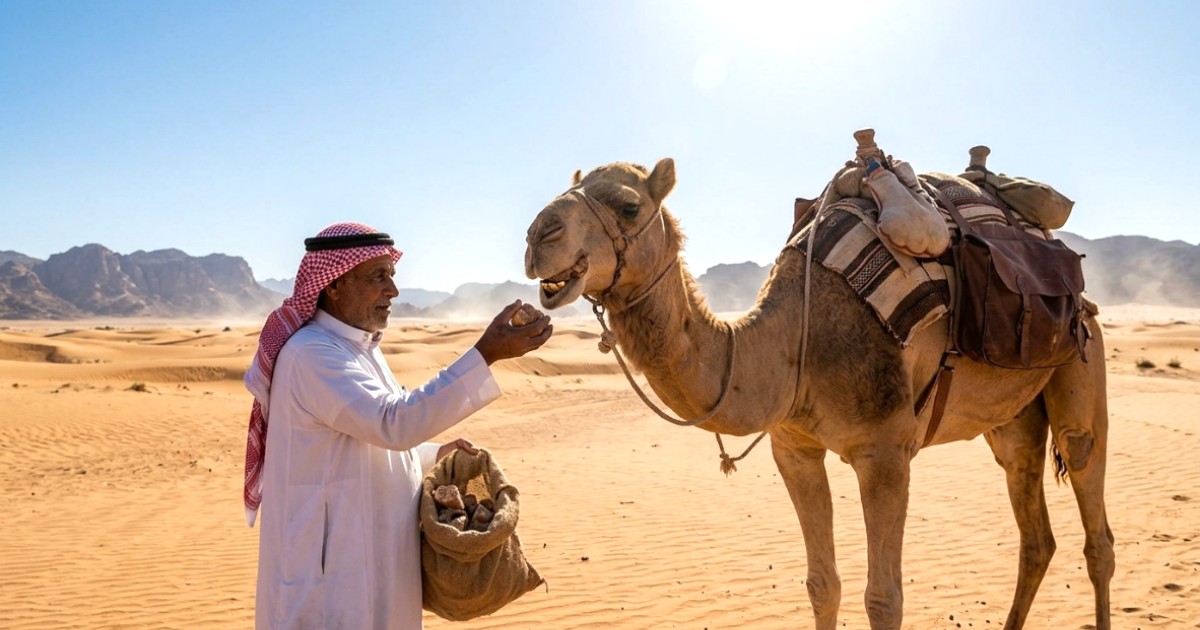
Desert communities preparing dromedary camels for grueling long-distance transits across arid banyans systematically force the animals to consume high volumes of raw salt prior to departure. While introducing excessive sodium seems counterintuitive and dangerous under high-temperature conditions, the custom leverages a sophisticated physiological mechanism unique to the biology of these desert dwellers. Modern zoological assessments confirm that the traditional practice acts as a highly effective fluid regulation strategy to counter extreme thermal conditions.
The strategic mineral consumption triggers a massive metabolic chain reaction designed to maximize resource retention.
Administering salt rapidly amplifies the animal`s natural thirst drive, prompting it to ingest immense quantities of water to build a localized systemic reserve before accessing arid terrains. Throughout the multi-day march, the circulating sodium functions as a critical electrolyte stabilizer, preserving blood pressure indexes and minimizing active tissue exhaustion. Furthermore, contemporary veterinary imaging completely refutes the popular cultural myth asserting that camel humps store liquid, establishing that the structures consist entirely of dense fatty deposits that convert into metabolic moisture and energy during periods of starvation.
The evolutionary adaptation of the species incorporates several supplementary survival mechanisms, most notably their unique oval-shaped red blood cells. Unlike standard mammalian circular cells, these flexible ellipses maintain regular cardiovascular circulation through constricted pathways even when advanced dehydration causes the bloodstream to thicken. Concurrently, specialized renal filters eliminate chemical moisture waste while modified nasal passages trap exhaled humidity to recycle respiratory condensation back into the system. These combined biological parameters demonstrate the profound intuitive ecological knowledge preserved by nomadic herders across generations.