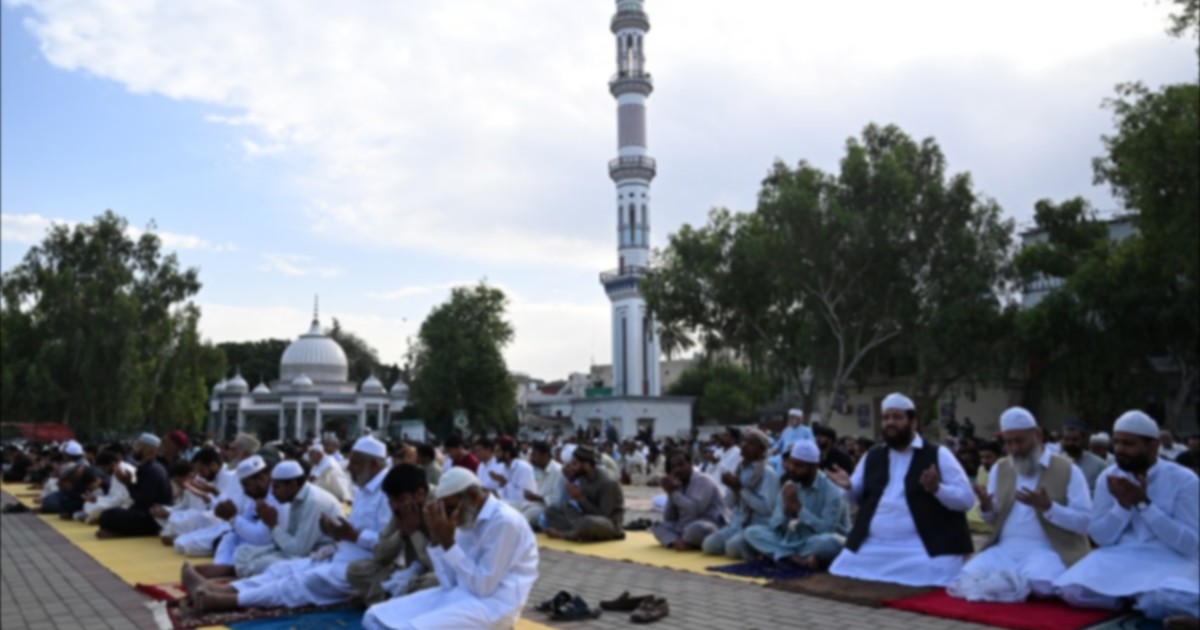
Millions of Muslims across Saudi Arabia, the United Arab Emirates, Qatar, and other parts of the Middle East are celebrating Eid al-Adha today. The annual festival of sacrifice is also being observed in Pakistan, Indonesia, Iran, Turkey, Palestine, and Australia, where communities gathered early in the morning for congregational prayers. The occasion marks one of the most significant events on the Islamic calendar, drawing together diverse populations in shared worship.A massive congregation filled the Masjid al-Haram in Makkah for the Eid prayers.
The prayers at the Grand Mosque were offered just after sunrise, attended by hundreds of thousands of international pilgrims completing their Hajj rituals alongside local residents. Official state media reported that the sermons focused heavily on global peace, community solidarity, and spiritual devotion. Similar large-scale gatherings were documented at the Eidgah grounds in Rawalpindi, Pakistan, and along the coastal fronts of Jakarta, Indonesia, reflecting a synchronized celebration across multiple continents.
The timing of the festival follows the sighting of the crescent moon of Dhul Hijjah on May 17 in these regions. In countries like Bangladesh, where the moon was sighted a day later, the official national celebration is scheduled for Thursday. Despite the regional differences in official calendars, several historical villages across various districts in Bangladesh chose to observe the festival today, aligning their prayers and livestock sacrifices directly with Makkah.
Rooted in Islamic tradition, Eid al-Adha honors the profound devotion of Prophet Ibrahim, who remained prepared to sacrifice his son Ishmael in compliance with a divine command. According to Islamic scripture, a ram from heaven was substituted at the final moment, establishing the tradition of animal sacrifice that continues to this day. The meat from the sacrificed livestock is traditionally divided into three parts, shared equally among the family, relatives, and marginalized members of society.
Following the morning sermons, worshippers exchanged traditional greetings and immediately began the ritual processing of meat. Amid ongoing economic and geopolitical challenges globally, community leaders emphasized using the festival to support vulnerable families and strengthen humanitarian relief efforts worldwide.