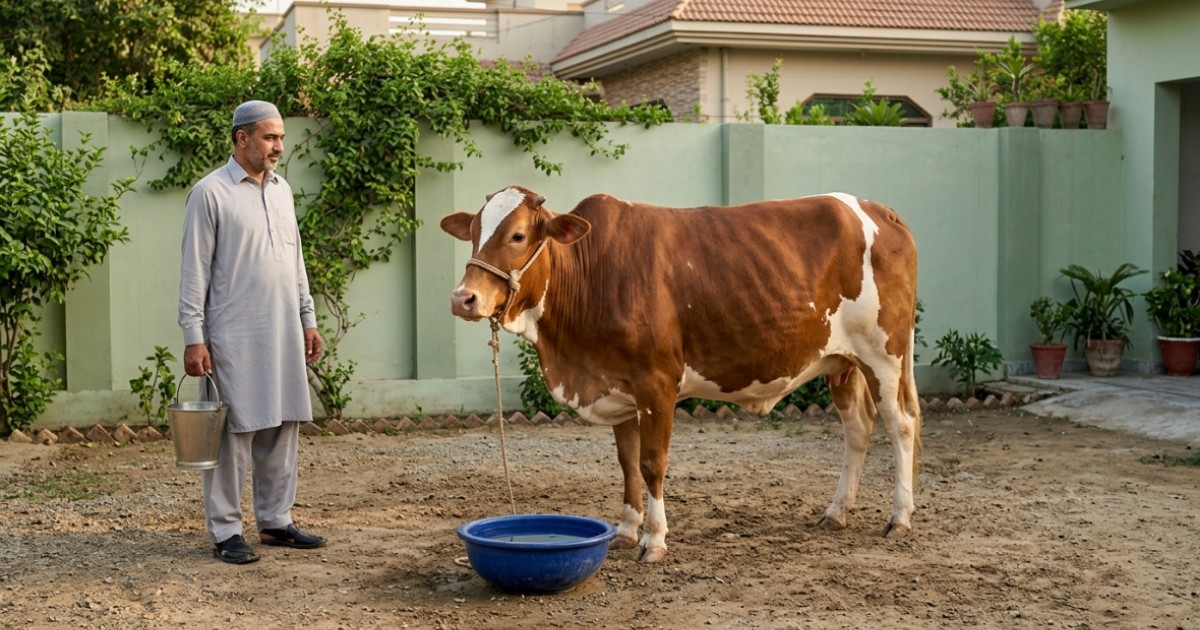
As millions of families worldwide prepare for the traditional rituals of Eid al-Adha, managing the health and care of livestock remains a top priority. Proper nutrition and housing directly influence the overall hygiene and texture of the meat harvested during the festival. However, many individuals are unaware that livestock must undergo a brief fasting period before slaughter. Livestock experts emphasize that halting food intake at a specific time is critical for maintaining food safety standards and meat preservation.Animals must be withheld from all solid and granulated feed for 12 to 15 hours prior to slaughter.
This fasting period is backed by significant veterinary and scientific reasons. When heavy forage, straw, or grains are discontinued ahead of time, the animal`s digestive system completely processes the remaining contents of its stomach. This ensures that during the dressing of the carcass, the risk of accidental rupture and contamination from semi-digested waste is virtually eliminated. Consequently, the entire meat processing environment remains thoroughly sanitary and efficient.
While solid food must be restricted, providing unlimited access to clean, fresh water right up until the final moment is absolutely mandatory. Ample hydration helps keep the animal`s blood thin and well-circulated, facilitating swift and complete blood drainage immediately after slaughter. Residual blood within muscles can cause rapid spoilage and encourage bacterial growth over time. Furthermore, fasting promotes the conversion of muscle glycogen into lactic acid, which naturally tenderizes the meat, enhancing both taste and tenderness during cooking.
Failing to adhere to this timeline can lead to severe challenges during the processing stage. Feeding livestock right up to the hour of slaughter results in excessive visceral waste, which can easily taint the flavor of the meat and lower its shelf life. Moreover, full digestive tracts put unnecessary pressure on the hide, making it significantly harder to skin the animal cleanly without damaging the valuable leather asset.
Adhering to these expert recommendations ensures that the religious obligation of sacrifice is executed in the most responsible and hygienic manner possible. Transitioning animals to a water-only regimen the night before the scheduled slaughter protects the overall health of the consumer. This small operational adjustment guarantees that the resulting meat remains safe, wholesome, and nutrient-rich for distribution.