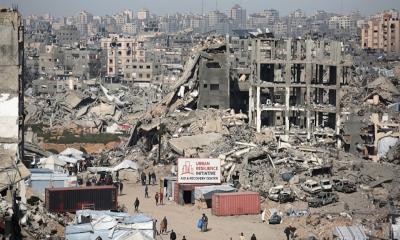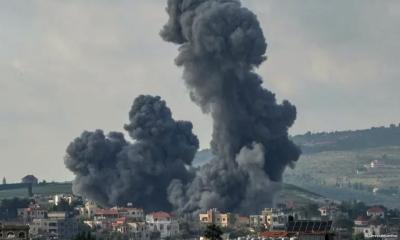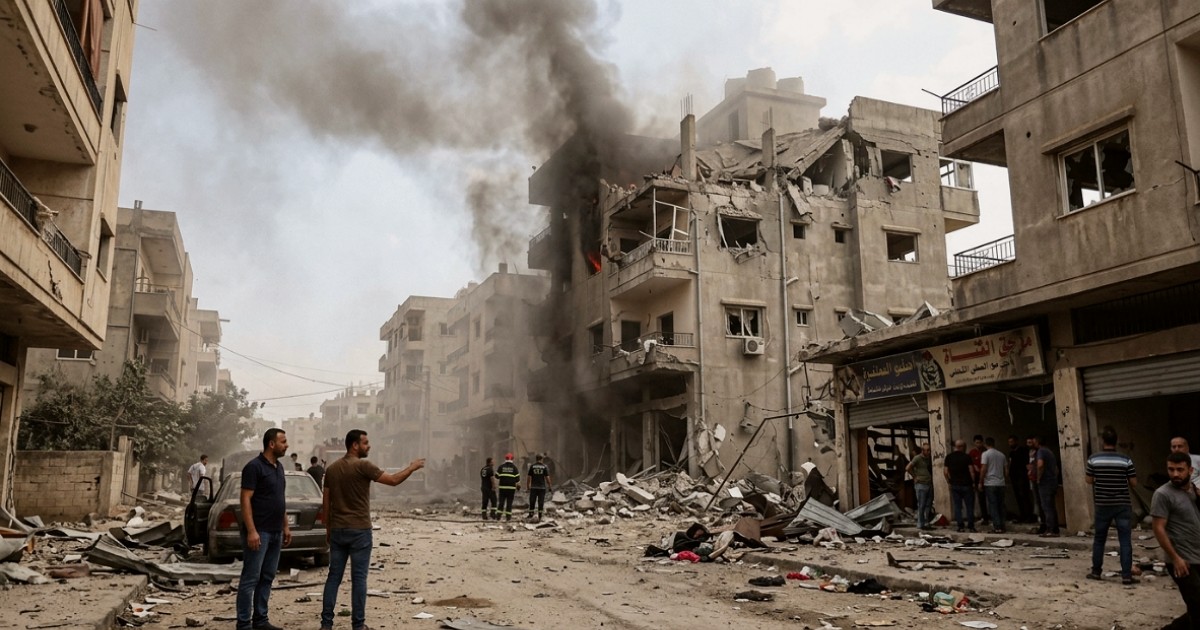
Israel has continued its military offensive in southern Lebanon despite a newly announced ceasefire agreement brokered by the United States. According to reports from Al Jazeera and AFP, at least five people were killed on Friday as Israeli warplanes and drones conducted multiple strikes across several towns. The Lebanese state-run National News Agency reported that the attacks targeted residential areas, key infrastructure, and roads, including a significant demolition operation in Bab al-Thaniya. Israeli military aircraft also struck areas in close proximity to Jabel Amel Hospital.
The toll of the recent strikes has been devastating for local communities. In Habboush, two individuals, including a medical doctor, were confirmed dead. Meanwhile, an attack in Doueir resulted in the death of a young man and left another seriously wounded. Further casualties were reported in the village of Qalawiya Tower, where one person was killed and another injured. Additionally, a drone strike in Kfar Reman killed a man inside his vehicle. Alongside these military actions, the Israeli army has issued new forced displacement orders, affecting nine towns and villages across the southern region.
These latest hostilities follow the announcement of a US-brokered ceasefire on Thursday, which aimed to de-escalate the situation. The agreement was negotiated by the Trump administration, occurring only weeks after a previous attempt to cease hostilities had been announced on April 16. That prior agreement failed to hold, and in the intervening period, more than 600 people were killed in Israeli strikes across Lebanon. Furthermore, the Israeli military has significantly expanded its footprint in the south, with reports suggesting that it now occupies approximately one-fifth of Lebanese territory.
The continued exchange of fire suggests that the prospects for the current ceasefire holding are slim. Despite diplomatic efforts in Washington, the reality on the ground remains marked by persistent confrontation between Hezbollah and Israeli forces. The pessimism surrounding the deal is shared by many observers who note that both sides have shown little willingness to halt military operations. The diplomatic framework currently in place has been unable to prevent the cycle of violence, leaving the civilian population in a state of constant peril.
The humanitarian impact of the ongoing conflict is profound. The healthcare infrastructure is struggling to cope, and the constant threat of airstrikes has disrupted the lives of hundreds of thousands of people. International organizations have repeatedly warned that the failure to establish a stable and monitored ceasefire is exacerbating an already acute humanitarian crisis. As the violence continues, calls for a more robust and enforced diplomatic resolution have grown louder, though there is little indication that a full cessation of hostilities is imminent. The international community watches with concern as the hope for peace remains eclipsed by the realities of a widening war.