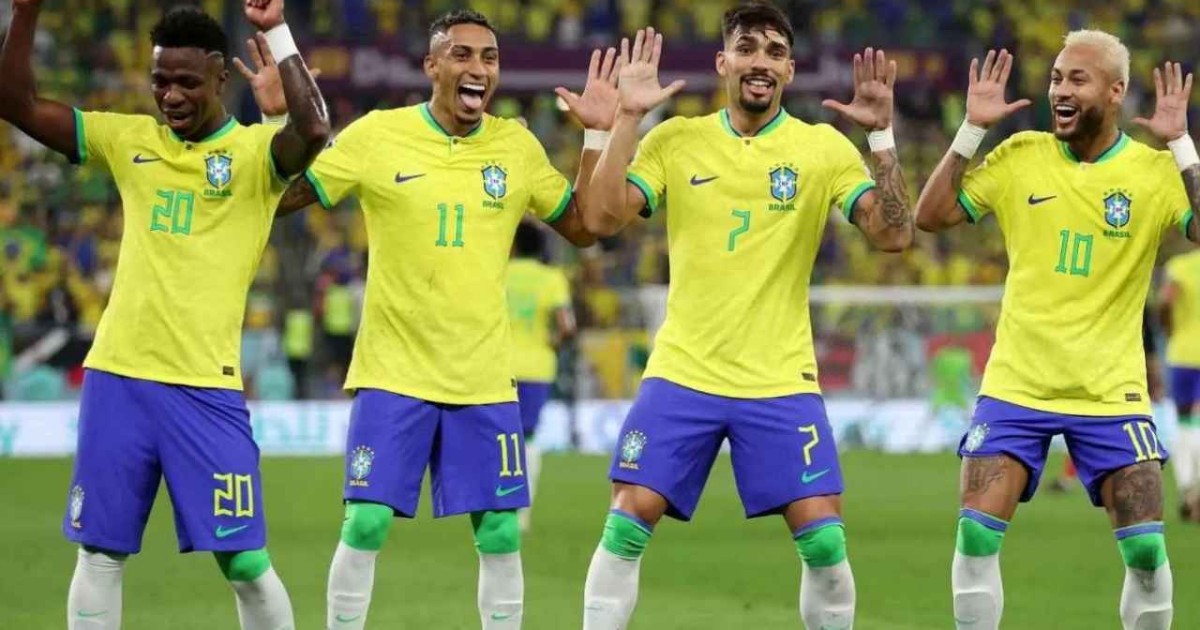
The excitement surrounding the 2026 FIFA World Cup is reaching a fever pitch as fans across the globe prepare for the "Greatest Show on Earth." For Brazil, this tournament represents another attempt at their elusive sixth world title—the "Hexa." Having not lifted the golden trophy since 2002, the five-time champions are pinning their hopes on a squad led by Italian tactical mastermind Carlo Ancelotti and star talents like Neymar and Vinicius Jr.
Brazil has been drawn into Group C, alongside Morocco, Scotland, and Haiti. While Morocco stands out as the most formidable opposition on paper, Scotland is widely viewed as the "dark horse" of the group, capable of causing an upset. Navigating this group is the first hurdle for the Seleção. To understand their path beyond the group stage, one must analyze the bracket structure of the 48-team tournament format.
If Brazil finishes as the champion of Group C, their journey in the Round of 32—the 76th match of the tournament—will see them face the runner-up of Group F. Group F features powerhouses like the Netherlands, alongside Japan, Sweden, and Tunisia. While the Netherlands is heavily favored to win that group, the runner-up spot is a tight contest between Japan and Sweden. Facing a seasoned European side or a disciplined Asian team in the first knockout stage will serve as an immediate test of Brazil’s championship credentials.
Conversely, should Brazil qualify as the runner-up of Group C, their path changes significantly. In this scenario, they would face the winner of Group F, likely the Netherlands. Crossing paths with the group favorites early in the knockout stages adds a layer of tactical complexity to their campaign. Furthermore, if Brazil advances as one of the best third-placed teams, their bracket positioning becomes more unpredictable, dependent on the final results across all groups, making it difficult to pinpoint a specific opponent until the final group matches are concluded.
In football, however, calculations on paper rarely dictate the reality on the pitch. The beauty of the World Cup lies in its unpredictability, where tactical execution and composure under pressure determine the outcome. Supporters are optimistic that Ancelotti’s leadership will provide the necessary structure to guide Brazil’s attacking flair through any opposition. Regardless of the opponent, the objective for Brazil is singular: to overcome all obstacles and finally return the trophy to the spiritual home of football. As the tournament kicks off, fans remain hopeful that the Seleção will navigate this intricate path successfully, inching one step closer to their sixth star.