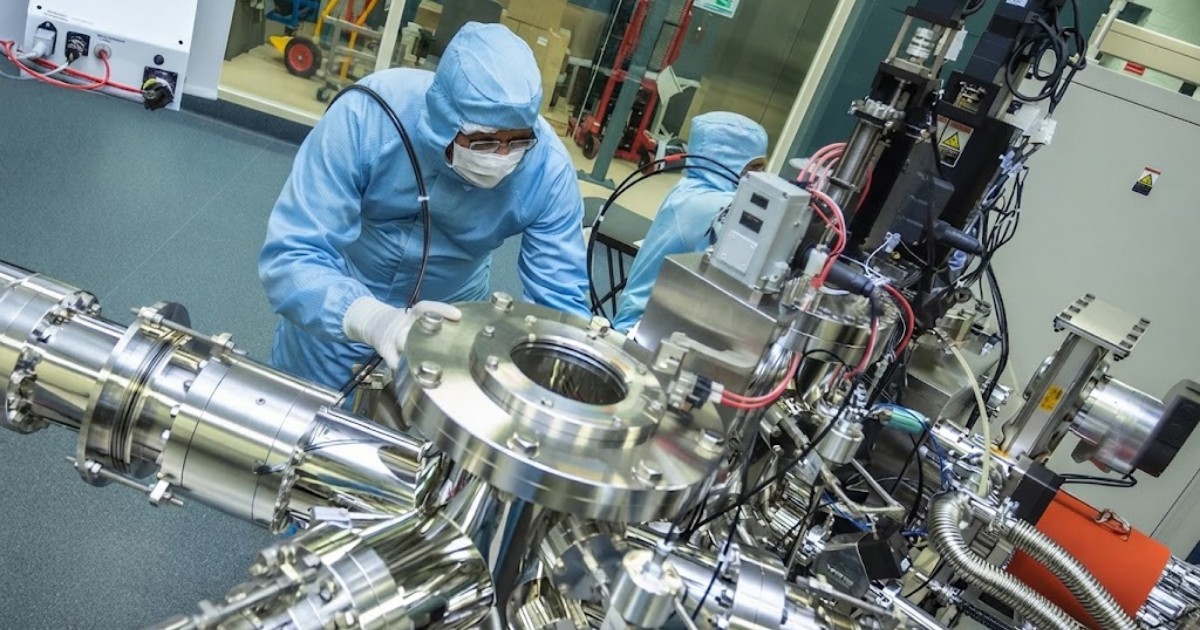
Scientists at Australia`s national science agency, CSIRO, have developed the world`s first working quantum battery prototype that charges faster the larger it gets, according to BBC News. Unveiled in March, the device breaks conventional rules by leveraging quantum mechanics rather than the two-century-old electrochemical processes used in modern batteries. While conventional batteries take longer to charge as their capacity increases, quantum mechanics flips this principle entirely.
Led by quantum researcher James Quach, the team utilized an optical microcavity set-up featuring organic dye molecules placed between tiny mirrors and beamed with a laser. This method strongly couples light and molecules to form hybrid states, triggering a phenomenon known as superabsorption where molecules act in unison to absorb energy. Consequently, the rate of energy absorption scales directly with the number of molecules present in the system.
The current prototype operates on a microscopic scale, storing energy for a matter of nanoseconds before it dissipates. However, recent breakthroughs by the research team include successfully extracting an electrical current from the prototype for the first time. Despite these promising advancements, independent experts remain cautious about scaling the technology for everyday commercial use.
Physics professor Dario Ferraro from the University of Genova noted that environmental interactions can degrade fragile quantum effects, while Queen`s University Belfast physicist Mauro Paternostro emphasized the challenge of extracting energy in a usable form. Researchers are currently developing hybrid structures to improve energy retention and expand capacity for future quantum devices.