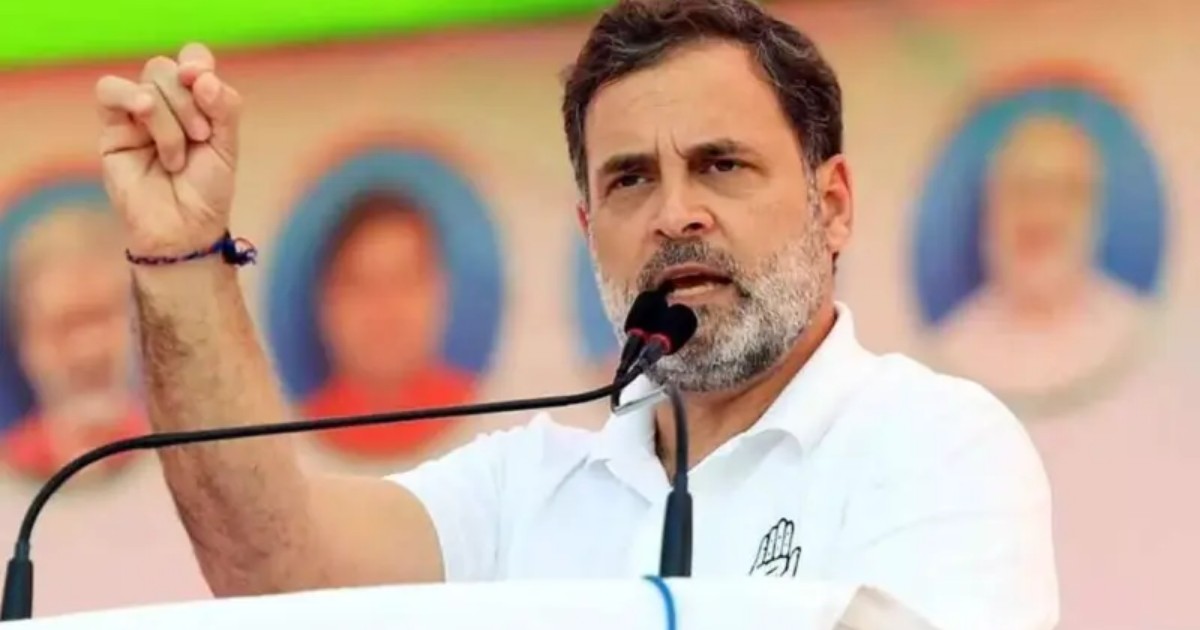
In a highly controversial and rhetorical attack, Leader of Opposition Rahul Gandhi leveled explosive allegations against Prime Minister Narendra Modi on Friday, May 8, claiming that the PM’s political autonomy has been severely compromised by the United States. Addressing a massive gathering in Gurugram, the Congress leader argued that PM Modi is effectively acting under the direction of U.S. President Donald Trump. Gandhi`s rhetoric reached a fever pitch when he stated that if President Trump tells Narendra Modi to jump, the Indian Prime Minister will do so without hesitation, signaling a complete loss of independent decision-making.
The centerpiece of Rahul Gandhi’s argument revolves around the infamous and highly sensitive "Jeffrey Epstein files." Gandhi alleged that there are approximately 350,000 files currently in America that contain damaging information regarding the Prime Minister’s "history and character." He claimed that the American leadership is using this data as leverage to exert diplomatic and political pressure on India. Gandhi further pointed to alleged statements by Donald Trump on his social media platform, where the U.S. President purportedly claimed he could end Narendra Modi’s political career in a minute, although Gandhi did not provide direct evidence of these specific posts or files during the rally.
Criticizing the recent bilateral agreements signed between New Delhi and Washington, Gandhi described them as evidence of coercion rather than mutual cooperation. He argued that no sovereign Prime Minister would sign deals that effectively "sell off" India’s agricultural sector, energy security, and most importantly, its citizens` digital data. According to Gandhi, the India-US trade deal is a wholesale surrender of the nation`s interests. He reminded the audience of his previous warnings in Parliament where he accused the government of allowing Washington to decide from which countries India should purchase its oil, thereby compromising national energy sovereignty.
The BJP and the Ministry of External Affairs (MEA) have previously dismissed such claims with contempt. MEA spokesperson Randhir Jaiswal had earlier termed references to the Prime Minister in materials linked to the late Jeffrey Epstein as "trashy ruminations of a convicted criminal." The ruling party has accused Gandhi of spreading falsehoods and attempting to defame the country’s leadership on the international stage. BJP leaders argue that India’s relationship with the U.S. is one of strategic partnership and that Gandhi’s comments are irresponsible and detrimental to India’s global standing during a period of complex geopolitical shifts.
Political analysts suggest that Gandhi’s decision to link the Prime Minister to the Epstein files is a high-stakes gamble that could intensify the domestic political divide. As India navigates a delicate diplomatic path amidst U.S. tariffs and energy policies, such explosive allegations add a new layer of complexity to the national discourse. Rahul Gandhi’s speech in Gurugram serves as a stark reminder of the sharpening ideological battle in India, where the opposition is increasingly framing the Prime Minister as being beholden to external powers. The Congress leader concluded his speech by vowing to continue defending India’s sovereignty, stating that his party would not retreat an inch.