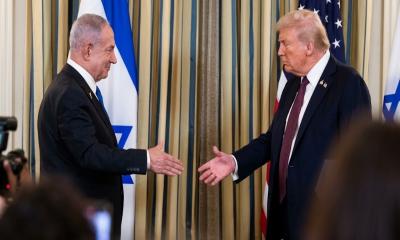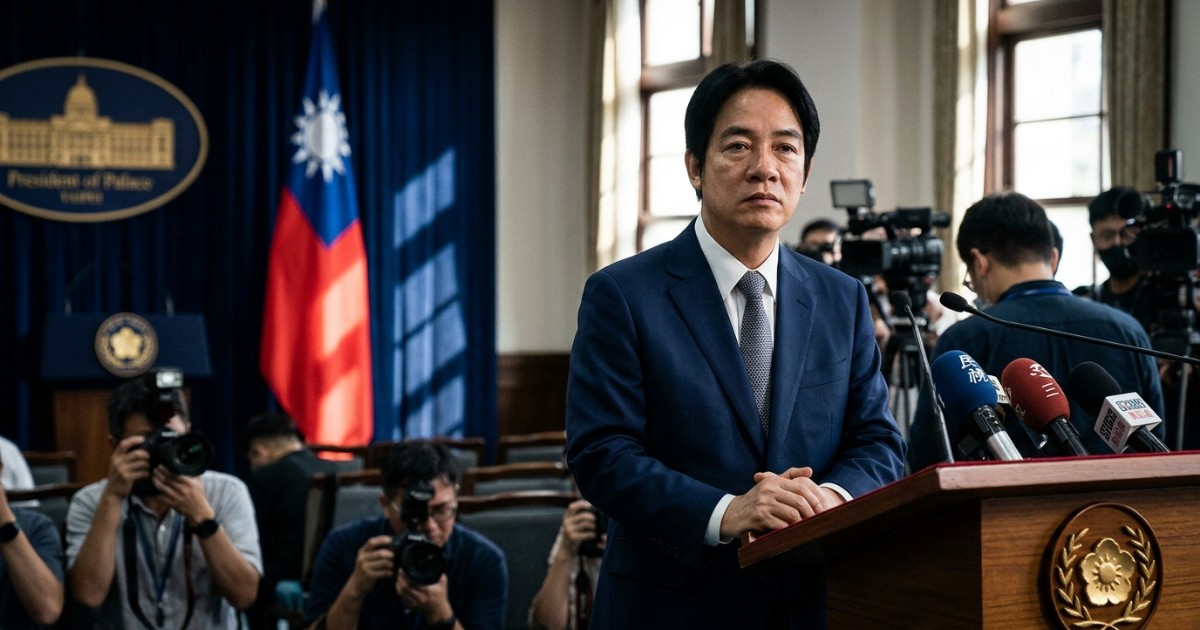
Taiwanese President Lai Ching-te confirmed that the island will not provoke any military conflict but will remain steadfast in defending its national sovereignty. This announcement marks Lai’s first direct reaction following a high-stakes summit between US President Donald Trump and Chinese President Xi Jinping. The two global leaders engaged in intense discussions regarding Taiwan`s political status and its movement toward formal independence.
Beijing continues to claim the self-governed island as part of its sovereign territory.
According to Chinese state media outlets, Xi informed Trump that Taiwan represents the single most critical and sensitive issue in bilateral relations. Xi emphasized that mishandling the situation could directly trigger an armed conflict between the two global superpowers. Following his visit to Beijing, Trump issued an explicit warning to Taiwan during a Fox News interview, stating that his administration is not looking to support any declarations of formal independence. However, the United States remains legally bound by the Taiwan Relations Act to supply the democratic island with defensive military equipment.
Trump reiterated that standard US foreign policy regarding Taiwan has not undergone any structural shift. He clarified that his administration does not seek an active confrontation with Beijing over cross-strait issues. While Trump acknowledged discussing the multi-billion-dollar arms sales with Xi in great detail, he informed reporters aboard Air Force One that he made no definitive commitments to either side. When questioned about Washington`s historic 1982 assurance not to consult Beijing on Taiwanese arms supplies, Trump dismissed the timeline, stating that the 1980s was a long way away.
Most Taiwanese citizens strongly favor maintaining the current geopolitical status quo.
Under President Lai and his predecessor Tsai Ing-wen, the Taiwanese administration has long argued that a formal declaration of independence is unnecessary. The leadership views Taiwan, officially known as the Republic of China, as an already established, sovereign, and democratic nation. Lai noted in a public social media statement that the future of the island must align strictly with the collective will of the Taiwanese population. Beijing, however, has consistently labeled Lai as a dangerous troublemaker and a major destroyer of cross-strait peace and stability.
The diplomatic friction intensified after the Trump administration approved a massive eleven-billion-dollar arms sale to Taiwan last December. In response to one of the largest weapons deals in history, Beijing escalated its military pressure by executing regular drills and blockade simulations surrounding the island. On Sunday, Lai extended formal appreciation to Trump for his ongoing support of regional peace and emphasized that deeper security cooperation with the United States remains critical as China expands its military footprints without renouncing the use of force.