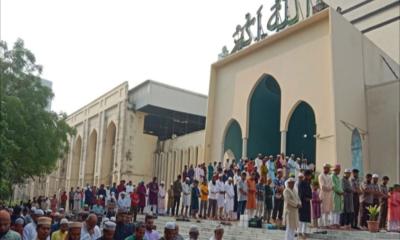
The Kingdom of Eswatini—formerly recognized as Swaziland—stands as one of the smallest landlocked nations in the southern African subcontinent, navigating a distinct growth in its minority Muslim demographics. Encompassed by South Africa and sharing a narrow eastern border with Mozambique, the mountainous nation of one point two million residents remains predominantly populated by Christian majorities. While precise census figures regarding local Islamic communities retain a historic degree of statistical ambiguity, current tracking indicates that roughly twenty-two thousand Sunnis operate within the country, accounting for nearly three percent of the aggregate population.
The structural trajectory of Muslim settlements inside the territory reflects a highly resilient socio-economic evolution.
Although historical footprints indicate that North African and Arab commercial mariners routinely traversed the adjacent Mozambican coastlines during the eighth century, stable Islamic integration did not consolidate until the early decades of the twentieth century. Under British colonial administration, wealthy Muslim merchants originating from the Gujarat province of undivided India transitioned into the region via South Africa. These pioneering households established permanent commercial channels, securing formal operational rights under the Swaziland Protectorate Act of 1907. Throughout this initial structural phase, the South Asian diaspora functioned primarily as a closely-knit mercantile guild, maintaining corporate focus on market operations rather than institutional proselytization.
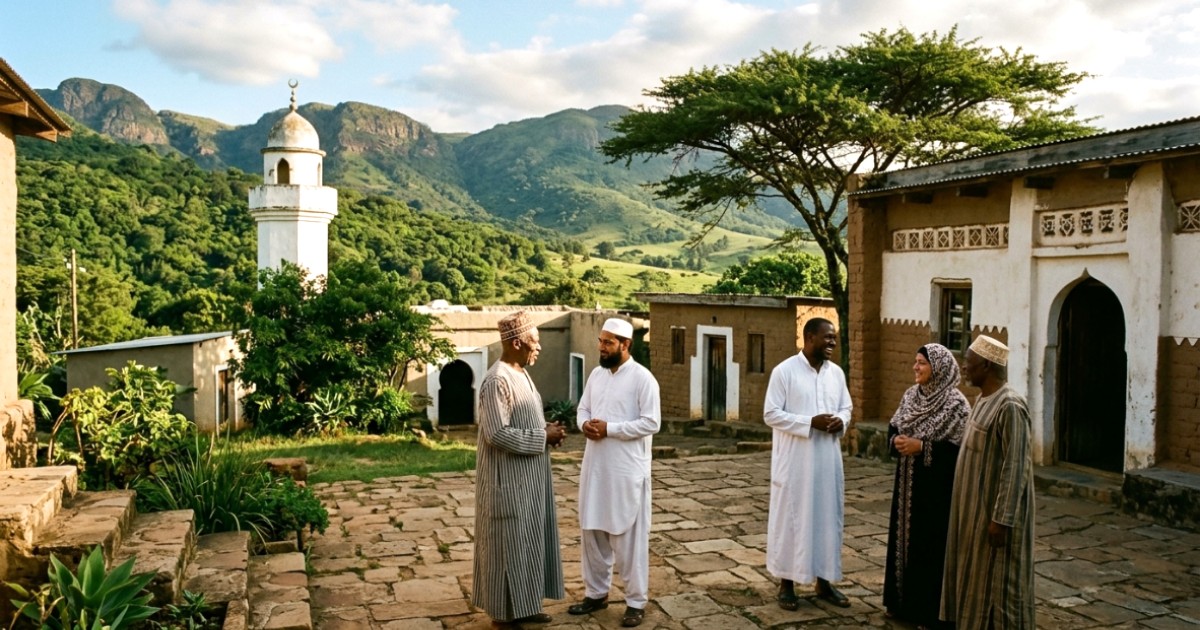
The internal composition of the domestic Muslim framework diversified significantly during the 1960s following a substantial influx of foreign labor forces. A large contingent of Muslim mining personnel arrived from Malawi to secure employment within the regional asbestos extractions sectors, catalyzing the growth of distinct urban communities. Following the attainment of national independence in 1968, the ruling monarch officially granted formal state recognition to Islam in 1972, enabling the community to participate in centralized state ceremonies. By 1978, the nation’s foundational public mosque was erected within Ezulwini village near the capital city of Mbabane, initially accommodating three hundred congregants while servicing a broader regional register of twelve hundred believers.
Subsequent institutional developments materialized in 1982 with the construction of a dual-purpose mosque and madrasa facility in the Malunge sector, providing standardized foundational literacy to local children. The formal inception of the Islamic Youth Organization of Swaziland in 1995 redirected community resources toward structured poverty reduction, employment generation, and formal academic programs, culminating in the establishment of the first specialized Islamic school in 2003. Eswatini currently houses nine operational mosques, which function simultaneously as spiritual centers and informal educational hubs where juvenile classes analyze Quranic recitation, introductory Arabic syntax, and essential theological tenets.
Due to regional regulatory architectures and social considerations, contemporary propagation parameters rely on quiet individual networks rather than public missionary operations. Concurrently, a noticeable rise in interfaith marriages with the native Swazi population has introduced a dual dynamic, driving conversion rates upward while occasionally causing minor attrition due to a lack of prolonged institutional mentorship. Operating without large-scale international corporate sponsorships, the steady preservation of Islamic identity across this micro-state remains tied to localized family integration and mosque-based primary classrooms.