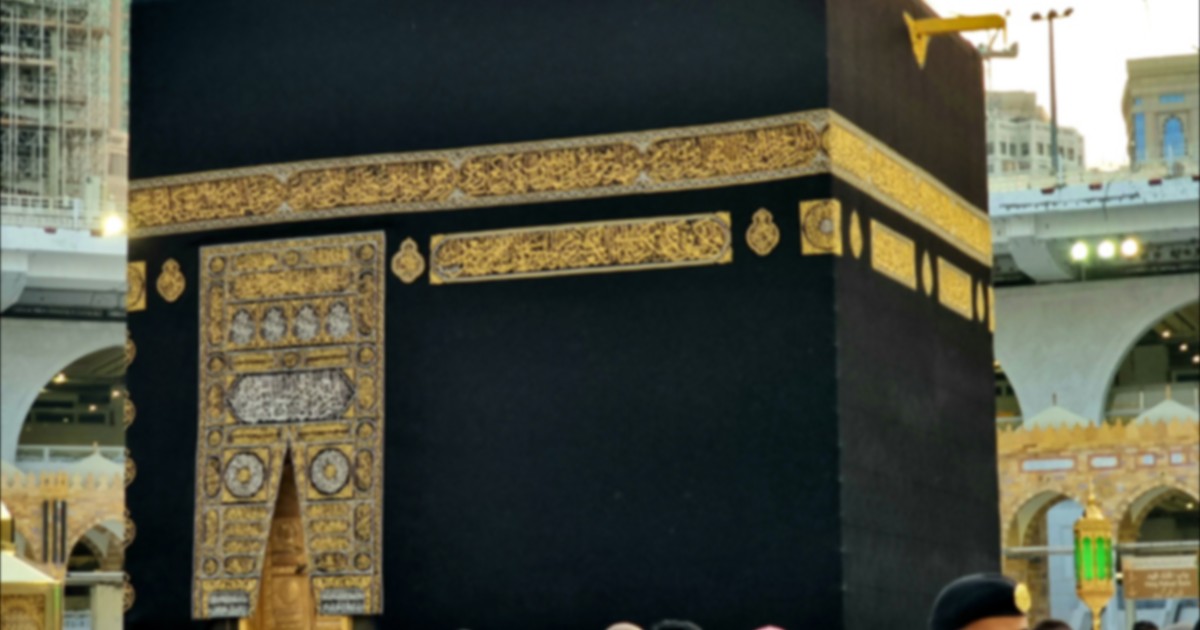
As more than 1.5 million international Muslims gather in the holy city of Makkah to perform the annual Hajj rites, millions of eyes are fixed on the sacred structure at the center of the Grand Mosque. The structure remains permanently draped in a heavy black silk cloth adorned with intricate gold calligraphy, recognized globally as the Kiswa. While believers face this point daily for mandatory prayers, the details of its architectural design remain highly significant to the global community.The structural details inside the holy Kaaba reflect a profound sense of simplicity and historic solemnity.
The internal floor and lower wall panels are constructed from high-grade white marble highlighted by detailed insertions of green and dark-toned stones. Three massive parallel wooden pillars rise to support the double-tiered ceiling, representing some of the oldest structural components preserved within the sanctuary. The upper sections of the interior walls are draped with heavy green silk curtains displaying embroidered Quranic inscriptions. A small central enclosure holds traditional incense burners and historical vessels used during annual cleaning ceremonies.
The external silk covering, or Kiswa, requires approximately 670 kilograms of raw silk yarn and is meticulously prepared by specialized artisans in Saudi Arabia. The prominent khatt calligraphy running along its upper border is hand-woven using nearly 120 kilograms of pure gold and silver wire. This deliberate combination of dark fabric and radiant metallic text gives the sanctuary its iconic aesthetic, which is traditionally replaced every year during the pilgrimage cycle.
Geometrically, the term Kaaba translates to a cube or a quadrilateral structure, initially established under Islamic tradition by Prophet Abraham and his son Ishmael. The golden door of the structure is positioned significantly above ground level to protect the interior from flash floods, opening only for high-profile diplomatic delegations. The continuous maintenance of this holy site serves as a central focal point of unity, symbolizing the unyielding faith of the global Muslim population.