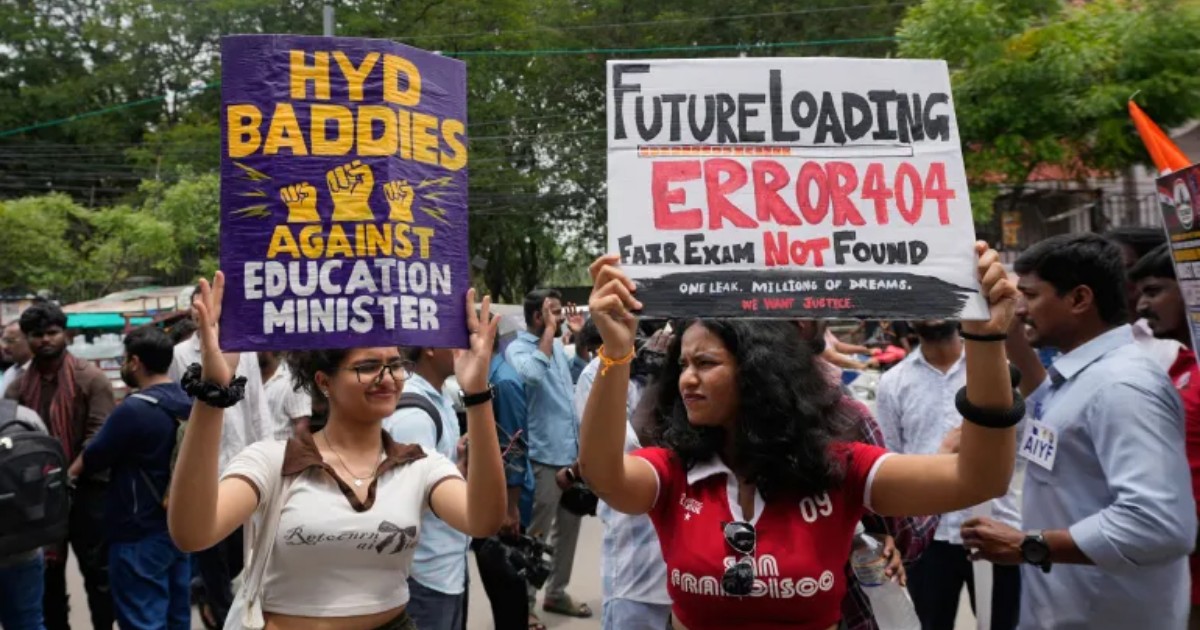
A satirical protest movement known as the Cockroach Janta Party (CJP) has emerged across India, fueled by widespread student anger over exam paper leaks and rising unemployment, according to reports from Al Jazeera and AFP. The movement, which began as a social media joke, has transformed into a rallying point for Generation Z, challenging the political establishment in the world’s most populous nation.
The origins of the movement trace back to a controversial remark made by the Chief Justice of India, Surya Kant, during a court hearing last month. The judge likened unemployed youth to cockroaches, suggesting that those without professional opportunities often turn to social media or activism. The comment sparked outrage, leading Abhijeet Dipke, an Indian student based in Boston, to challenge the derogatory label online. His call for unity among the perceived marginalized youth struck a chord, leading to the formation of the CJP.
The timing of the movement’s rise coincides with a national crisis regarding the National Eligibility cum Entrance Test (NEET). After widespread allegations of paper leaks and irregularities, the government nullified the exam, leaving millions of aspirants in limbo. This disruption became a catalyst for the CJP, providing a platform for students to voice their frustrations over a system they perceive as failing them. The resilience inherent in the cockroach symbol resonated with the students, who adopted it to highlight their own struggle to survive in a competitive and often inaccessible professional landscape.
On June 6, Dipke returned to India to lead the movement’s debut public rally at Jantar Mantar in New Delhi. The group demanded the resignation of the federal education minister, Dharmendra Pradhan, citing systemic failures in exam management. While the rally drew significant media attention, the turnout was modest, with reports indicating fewer than 2,000 participants. Critics have questioned the long-term viability of the movement, but supporters emphasize that the CJP’s strength lies in its digital infrastructure and the sincerity of its members’ grievances.
Political observers note that the emergence of the CJP mirrors historical patterns of civil mobilization in India. A similar anti-corruption wave in 2012 eventually propelled the Aam Aadmi Party to power in Delhi. Whether the CJP will seek similar electoral success remains unclear, as its leadership has focused primarily on issue-based advocacy. However, the movement underscores a deepening disconnect between the political class and the youth demographic.
As the government faces mounting pressure to overhaul its examination protocols and address unemployment, the CJP continues to grow in influence. The movement’s ability to sustain its momentum will likely depend on its capacity to translate digital engagement into tangible policy change. For now, the Cockroach Janta Party serves as a stark reminder of the power of youth-led activism in shaping the national discourse.