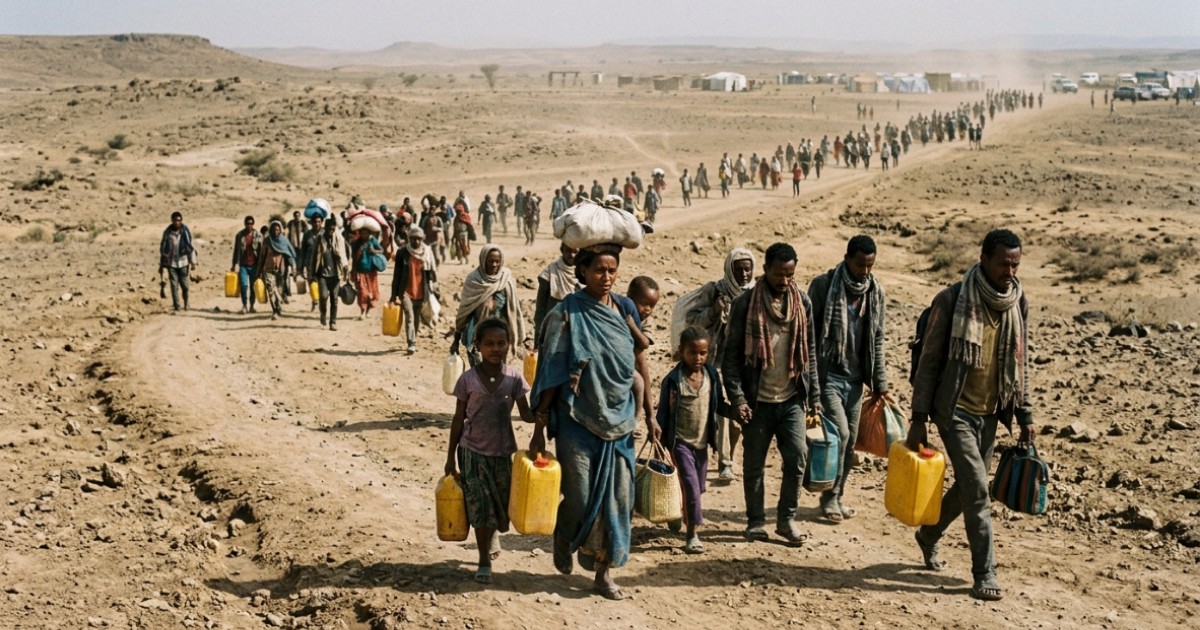
Hundreds of Tigrayans, including wounded fighters, have been fleeing into Sudan following intense armed clashes between the Ethiopian federal army and Tigray People`s Liberation Front rebels in northern Ethiopia, according to reports by AFP and Al Jazeera. The weekend fighting involved heavy artillery fire and tactical drone strikes, marking a severe and alarming breach of a fragile three-year-old peace deal that had previously ended years of devastating civil conflict. While the heavy exchanges subsided by Sunday afternoon, regional security observers warn that the sudden escalation has dramatically raised fears of a renewed nationwide war.
A TPLF representative confirmed that a de-escalation took place by Sunday evening, though mutual accusations continue to dominate political rhetoric. Tigrayan leadership accused the federal military of initiating a large-scale infantry offensive, claiming that state authorities deliberately intensified destructive military actions across the volatile border zone. For several months prior to the outbreak, both federal troops and regional forces had been heavily massed along northern Tigray`s contested borders, with each side accusing the other of plotting a deliberate provocation to restart hostilities and shatter the existing regional administration.
The renewed violence has revived deep trauma from the previous two-year conflict, which involved federal troops, local militias, and the Eritrean army. According to estimates published by the African Union, that brutal war resulted in hundreds of thousands of deaths, mass population displacement, and billions of dollars in vital infrastructure damage before a landmark peace agreement was signed in November twenty twenty-two. The collapse of institutional trust between Addis Ababa and regional authorities now threatens to undo the hard-won stability that allowed displaced families to slowly return to their homes and begin the arduous process of rebuilding their communities.
International humanitarian agencies have expressed profound alarm over the deteriorating security conditions along the border. Al Jazeera correspondents on the ground reported that artillery and drone fire triggered violent explosions near several large refugee camps situated close to the border on the Sudanese side. Residents in neighboring towns described hearing sustained gunfire and heavy explosions throughout the weekend as terrified civilians scrambled to cross safety checkpoints. The United Nations High Commissioner for Refugees has called for immediate restraint and unhindered access for humanitarian aid workers striving to assist the vulnerable population amid the chaos.
As the geopolitical situation remains tense, regional and international diplomats are urgently urging both sides to return to dialogue and respect the terms of the existing peace framework. The plight of the newly arrived refugees highlights the human cost of political stalemates in jargon-heavy regional politics. Without robust external mediation and verifiable commitments from both military commands, the fragile region risks plunging back into a catastrophic cycle of violence that could destabilize neighboring nations and cause immeasurable suffering for millions of civilians caught in the crossfire.