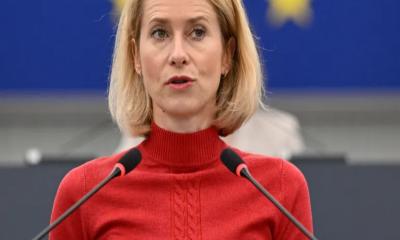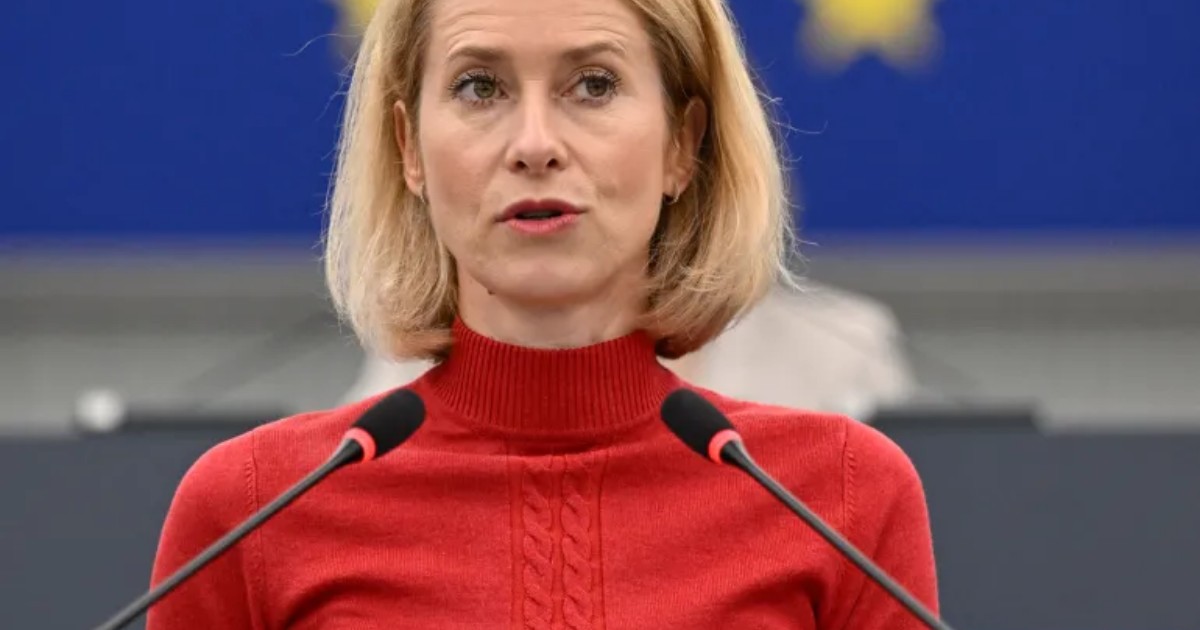
Israel severed all official contact with the European Union`s top diplomat over reported private remarks comparing the nation`s treatment of Palestinians to South Africa`s former apartheid system, the Israeli foreign minister confirmed on Thursday, according to Reuters and Al Jazeera. The serious diplomatic dispute emerged following a report by the European news outlet Euractiv, which revealed that EU High Representative for Foreign Affairs Kaja Kallas made the comments during closed-door meetings with Mexican government officials in May. According to unnamed diplomats present at the talks, Kallas drew a direct parallel between Israeli military blockades and segregation policies in the occupied West Bank and Gaza and the racial segregation regime that ruled South Africa until the mid-1990s. The Israeli government immediately reacted with outrage, characterizing the leaked description as a severe and malicious accusation against the state.
Israeli Foreign Minister Gideon Saar posted an official statement on social media stating that he had no choice but to freeze all institutional communications with Kallas until she officially retracted her statements. Saar accused the European envoy of acting obsessively and with blatant unfairness toward Israel, noting that her failure to issue a swift denial or clarification spoke for itself. Kallas responded publicly on social media later that day to emphasize the bloc`s continuous commitment to open dialogue and a diplomatic two-state solution, yet she conspicuously avoided addressing or denying the specific apartheid comparison attributed to her. The refusal to disown the leaked comments further intensified the standoff, leading Saar to reiterate that Israel`s diplomatic freeze would remain strictly in place.
What remains unclear is how this growing political rift will impact the long-term bilateral trade frameworks and strategic security cooperation agreements between Israel and the European economic bloc. In her public defense, Kallas maintained that the European Union remains dedicated to fostering a constructive relationship with Israel while simultaneously condemning the expansion of illegal Israeli settlements in the West Bank. However, her stance has exposed deeper structural and ideological divisions within the European Commission itself, where individual member states retain sovereign control over their independent foreign policies. While human rights groups and several international bodies have frequently described Israeli actions in Palestinian territories using the framework of apartheid, the terminology remains highly controversial and explicitly rejected by prominent EU nations like Germany and France.
The diplomatic fallout also triggered sharp internal debates among European leaders during a European Council summit convened in Brussels to finalize the regional budget. Irish Prime Minister Micheal Martin told reporters that Europe`s moral credibility on the global stage is significantly undermined by its collective failure to take a decisive stance against documented breaches of international law. Martin strongly criticized the Israeli foreign minister`s decision to sever ties with the high representative, labeling the diplomatic freeze completely unacceptable. Ireland, along with a coalition of other member states, has been actively pushing the European Commission to implement targeted economic sanctions against far-right Israeli ministers over their treatment of humanitarian activists and continuous expansion into Palestinian-owned lands.
Nele Anders, an international foreign policy analyst based at the European Council on Foreign Relations, explained that the ongoing dispute highlights how the diplomatic service has been progressively sidelined by the European Commission under Ursula von der Leyen. The analyst observed that European relations with Israel will likely continue to be dictated by individual national capitals rather than a unified collective voice from Brussels. This institutional friction comes at a highly sensitive time for Israel, which is already defending itself against serious charges of war crimes and genocide at the International Court of Justice. The freeze on communications marks the second time in recent months that Israel has isolated a major international leader, following a similar freeze imposed on United Nations Secretary-General Antonio Guterres over the blacklisting of its military forces.