Mauritania, a nation almost entirely covered by the Sahara Desert, remains one of the world`s least-visited countries with fewer than 10,000 international arrivals annually. Despite its immense geographical presence, the country is often overlooked by the global tourism community. The lack of robust tourism infrastructure and lingering perceptions regarding safety keep the visitor numbers low. However, the reality on the ground paints a different picture. Mauritania has not experienced a major terrorist attack since 2011, and according to the Global Terrorism Index, the country is statistically safer for travelers than many European nations.
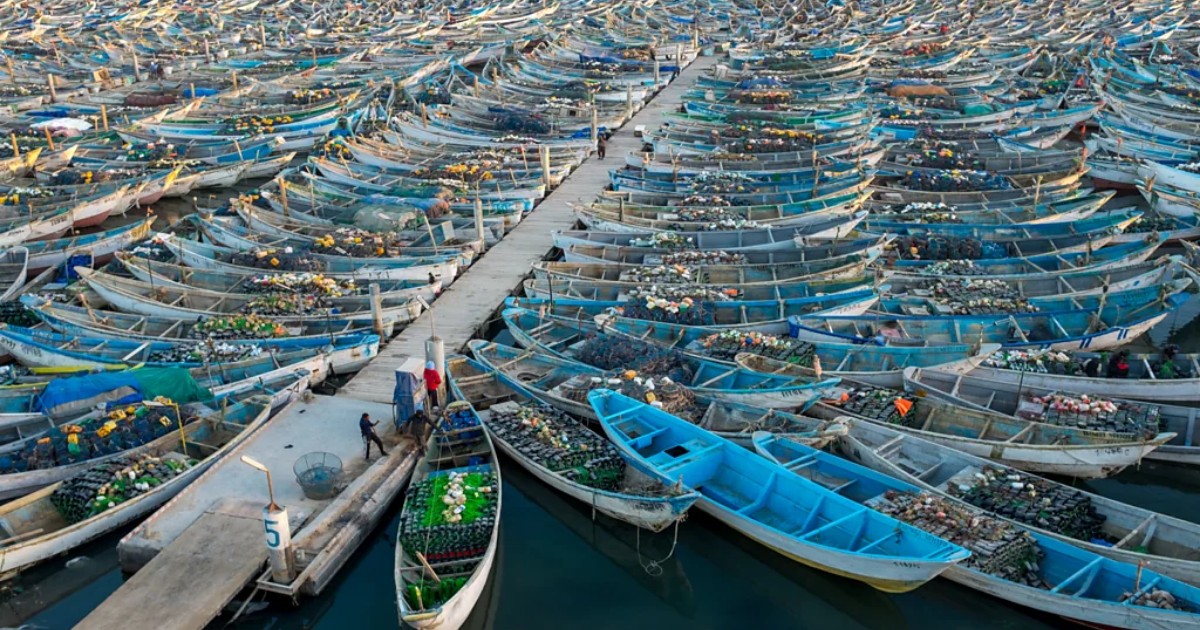
The journey into this North African gem often begins in Nouadhibou, the nation’s second-largest city and primary fishing hub. The Canary Current brings nutrient-rich waters to the northern coast, fostering a thriving marine ecosystem. Sardinella, mackerel, and octopus are abundant here, and the harbor is a visual spectacle, filled with thousands of colorful pirogues. This gathering of vessels is so massive that it can be observed from space. The industry here is vibrant, defining the livelihoods of thousands of local residents.
Moving south, the capital city of Nouakchott feels like a mirage rising from the desert sands. Roughly one-third of the nation’s five million residents live here. While the city center boasts modern infrastructure and mosques, the outskirts are blanketed in sand, giving the metropolis the welcoming, quiet character of a massive village. The contrast between urban development and the unforgiving Sahara creates a unique atmosphere that defines the Mauritanian experience for any visitor.
Traditional culture remains deeply rooted in the desert, particularly through the country`s reliance on camels. With an estimated two million dromedaries, these animals are essential for meat, milk, and transport. The Beila camel market, located near the capital, stands as the second-largest in Africa, serving as a hub for local trade where animals are traded for significant sums. Even the military utilizes these hardy animals for border patrols in remote desert areas.
For the adventurous traveler, the Route de l`Espoir, or the Road of Hope, offers a gateway into the deep east. Stretching over 1,100 kilometers from Nouakchott to Néma, this artery connects the modern capital to ancient heritage sites. Néma serves as the entrance to Oualata, a UNESCO World Heritage site known for its historic caravan routes. Traveling this road is a lesson in patience and endurance, often involving stops for prayer and nights spent under the vast, unpolluted Milky Way. While tourism to these remote regions has dwindled, the enduring beauty and solitude of Mauritania offer a rare, profound encounter with one of the most untouched corners of the earth.