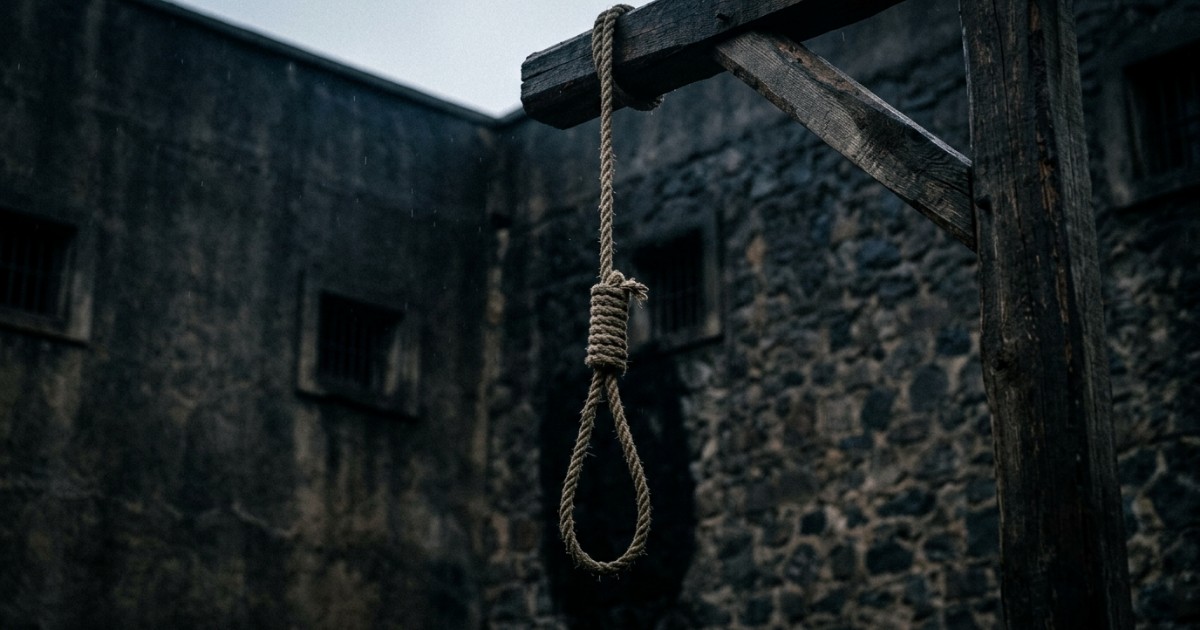
Executions on political and security charges have surged dramatically in Iran following recent military developments. The United Nations confirmed the execution of at least 32 political prisoners since February 28, when the United States and Israel launched attacks on Iranian territory. Human rights organizations warn that the death penalty is increasingly being weaponized to stifle growing domestic dissent.
The spike marks a steep year-on-year increase.
Throughout the entirety of 2025, a total of 45 politically motivated executions were documented, a threshold the country is rapidly approaching in just a few months. Among those recently executed was Mehrab Abdollahzadeh, a Kurdish shop owner detained during the 2022 nationwide protests. In a smuggled voice recording from Oromiyeh Central Prison prior to his hanging earlier this month, Abdollahzadeh maintained his innocence, stating his confessions were entirely extracted under severe torture and threats.
Executions are typically carried out by hanging at dawn. Monitoring agencies report that citizens are awakening to near-daily official announcements of deaths. Human rights groups express grave concern that several executions are being performed in complete secrecy without notifying legal councils or family members.
Last year, Iran carried out 2,159 executions.
This represents the highest annual figure recorded in the country since 1989. Analysts suggest that the regime is escalating its internal repression to project authority and maintain control while confronting multiple overlapping domestic and international crises. The accelerated pace of trials and sentencing has left numerous human rights groups alarmed over the total lack of judicial transparency.
Recent victims include Sasan Azadvar, a 21-year-old karate champion executed in Isfahan on charges of waging war against God after participating in demonstrations. Similarly, Erfan Shakourzadeh, an aerospace engineering student, was hanged on May 11 under espionage accusations. Before his death, Shakourzadeh managed to release a note through monitoring networks detailing how he was subjected to eight months of solitary confinement and forced confessions.
Iranian Judiciary Chief Gholamhossein Mohseni Ejei dismissed international condemnation regarding the severe sentences. He affirmed that national courts would remain unswayed by external pressure, signaling that the current hardline policy is set to continue.