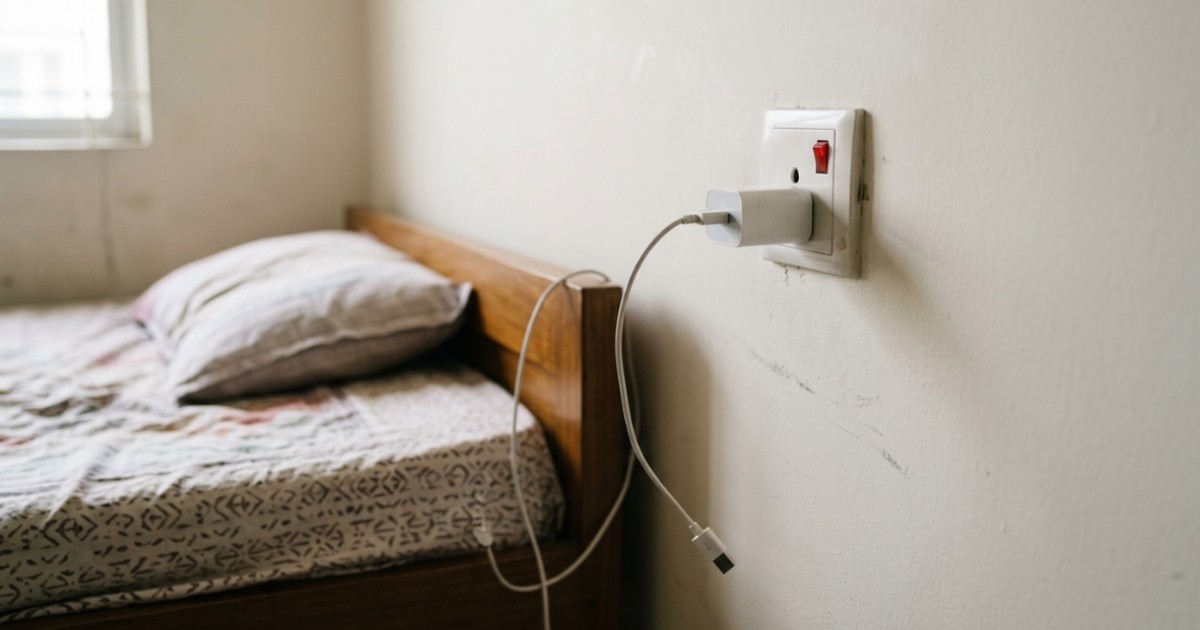
Smartphones have become an indispensable part of daily life, making the use of wall chargers an automatic routine for millions of users worldwide. Quite frequently, after a phone reaches its full charge, people tend to leave the adapter plugged into the wall outlet due to haste or simple oversight. A common misconception persists that if no device is connected to the cable, no electricity is consumed and no structural wear occurs. However, technology analysts confirm that a charger left active in a socket continuously draws a small amount of electrical current.
This specific phenomenon of passive electricity consumption is widely known as vampire power or standby power.
The structural design of a standard smartphone charger includes a miniature transformer and integrated circuitry engineered to convert high-voltage alternating current into low-voltage direct current. When the adapter remains connected to a live outlet, these internal components remain partially active, establishing a continuous electrical path. Technical evaluations indicate that an idle smartphone charger left plugged in can consume between 0.1 to 0.5 kilowatt-hours of electricity per year. While this figure appears minimal for a single unit, the cumulative effect of multiple phone chargers, laptop adapters, and media devices plugged in continuously across a household creates a measurable increase in annual energy expenses.
Beyond the financial implications of inflated electricity bills, leaving an active charger unmonitored introduces distinct structural and safety hazards. Continuous exposure to a live electrical supply forces the delicate internal components to operate non-stop, which often leads to localized overheating. This thermal accumulation becomes significantly more dangerous during the summer months or in poorly ventilated areas where ambient heat is already high. Sudden fluctuations in grid voltage or lightning strikes can easily cause short circuits within these energized units, potentially initiating electrical fires within the home.
This constant electrical resistance places a continuous strain on the internal circuits, ultimately degrading the overall operational lifespan of the device. The safety risks are exceptionally higher with cheap, counterfeit, or unbranded chargers that lack advanced overcurrent protection and built-in thermal safety fuses. Modern high-wattage fast chargers are engineered to handle substantial power loads, making it even more critical that they are not left energized without an active device attached. Developing a consistent habit of turning off the outlet switch or completely unplugging the device upon full charge offers both economic savings and enhanced household safety.